> For the complete documentation index, see [llms.txt](https://docs.otherside.xyz/llms.txt). Markdown versions of documentation pages are available by appending `.md` to page URLs; this page is available as [Markdown](https://docs.otherside.xyz/odk-docs/characters/creating-a-custom-character/creating-a-simple-avatar-collection/asset-production-and-qa.md).
# Asset Production and QA
We cover best practices for asset production and QA in [Asset Production Best Practices](/odk-docs/characters/creating-a-custom-character/asset-production-best-practices.md).
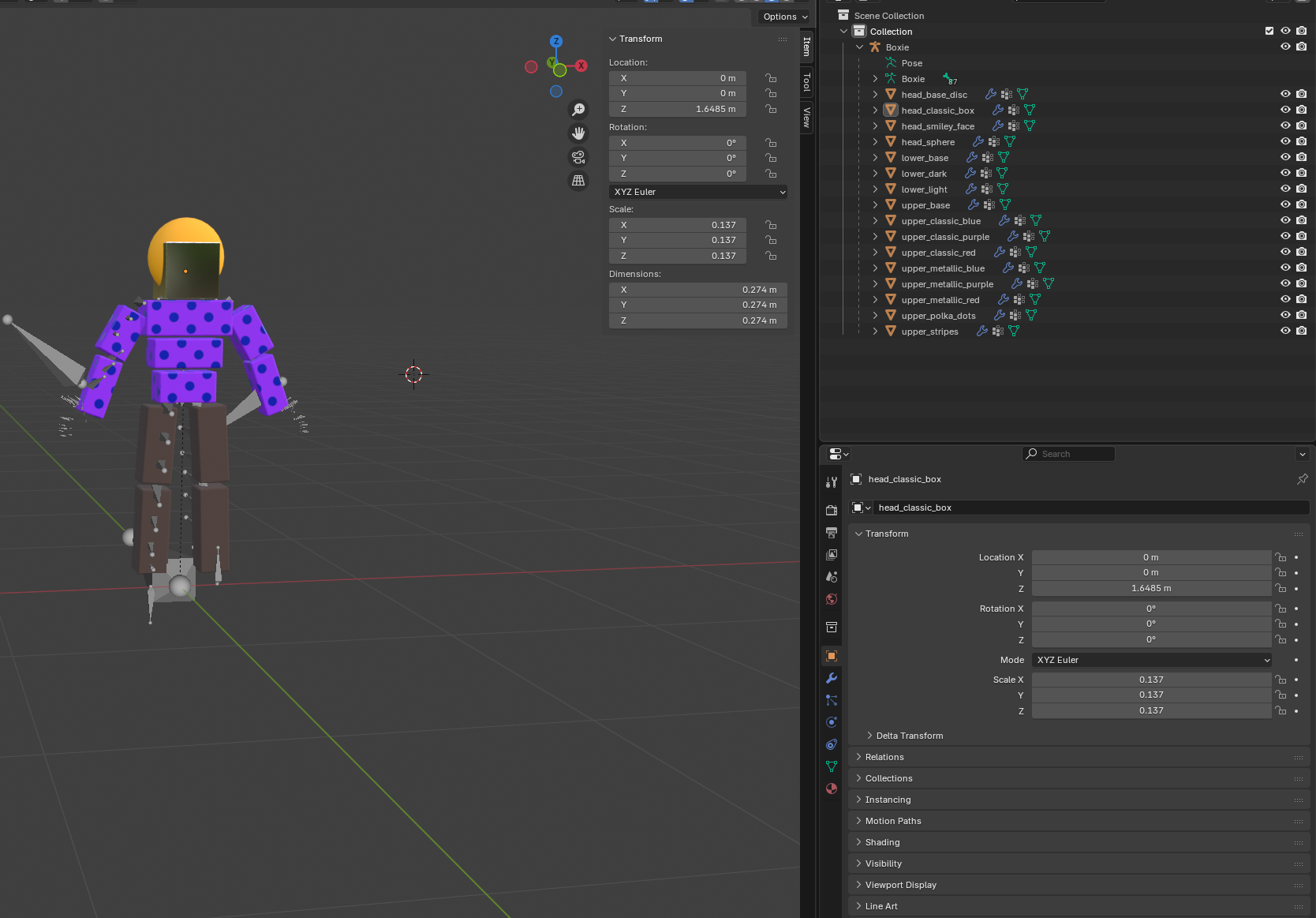
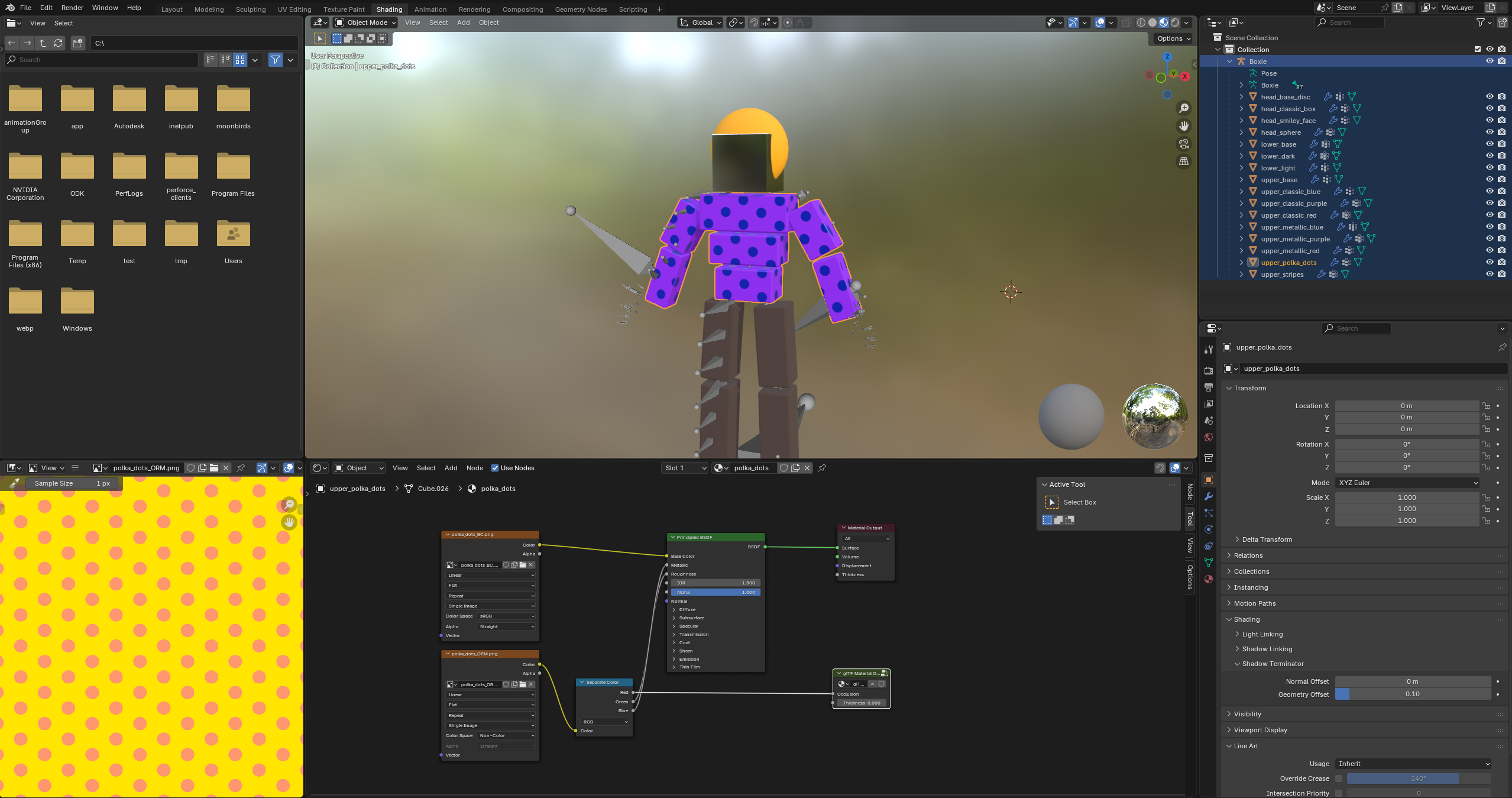
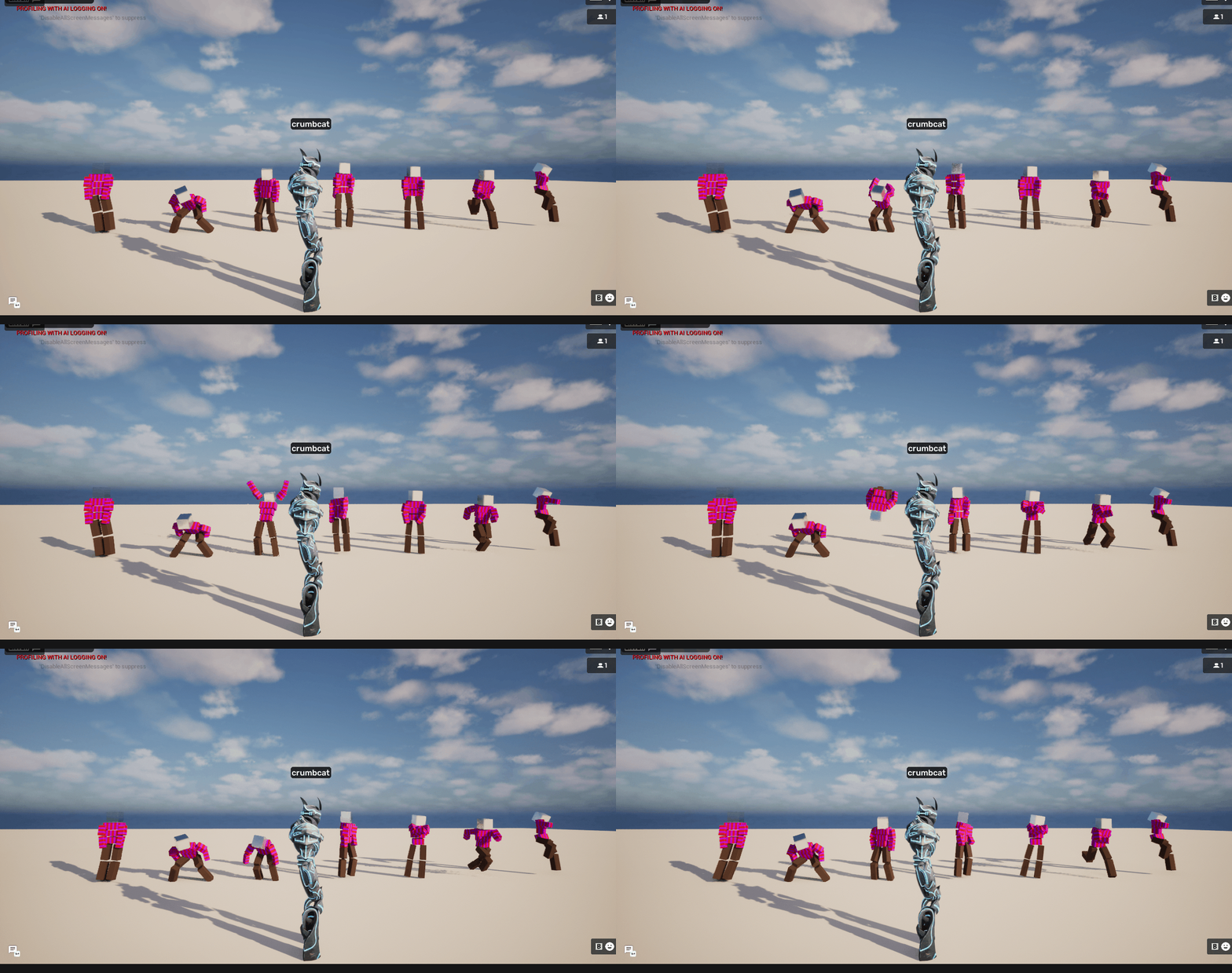
For this simple example the final Blender file ended up looking like the images below. All textures, meshes, and materials were made simply so I could finish this guide in a reasonable amount of time.
## QA
The QA process you take depends greatly on how your collection is structured. I would recommend taking the approach for review we did in the [Further Testing](/odk-docs/characters/creating-a-custom-character/creating-a-simple-avatar-collection/further-testing.md) section and adapting that for your collection. You could:
* Create a UI in engine to switch between avatars either via local files or use the load GLTF from URL node and have them uploaded to a public location.
* Set the blueprint to cycle through all avatars or a subset of avatars and render that to a video file from unreal to review the avatars.
If working with a large collection it helps to determine what the smallest subset of avatars represent all traits, and then add some spot checking of random avatars to hedge against faulty assumptions in the minimum trait list.
---
# Agent Instructions
This documentation is published with GitBook. GitBook is the documentation platform designed so that both humans and AI agents can read, navigate, and reason over technical content effectively. Learn more at gitbook.com.
## Querying This Documentation
If you need additional information that is not directly available in this page, you can query the documentation dynamically by asking a question.
Perform an HTTP GET request on the current page URL with the `ask` query parameter, and the optional `goal` query parameter:
```
GET https://docs.otherside.xyz/odk-docs/characters/creating-a-custom-character/creating-a-simple-avatar-collection/asset-production-and-qa.md?ask=&goal=
```
`ask` is the immediate question: it should be specific, self-contained, and written in natural language.
`goal` is optional and describes the broader end goal you are ultimately trying to accomplish on behalf of the user. GitBook uses it to tailor the answer towards what is most useful for that goal.
The response will contain a direct answer to the question and relevant excerpts and sources from the documentation.
Use this mechanism when the answer is not explicitly present in the current page, you need clarification or additional context, or you want to retrieve related documentation sections.